

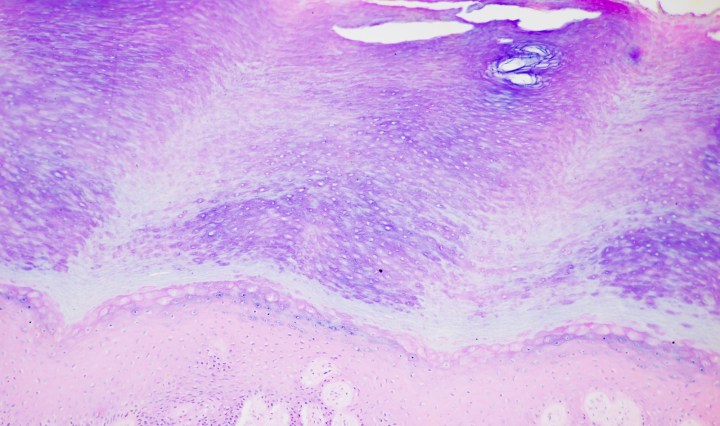
Stratified Squamous epithelium, Keratinized
Stratified epithelium is classified by the cell type on the uppermost layer. Notice that is true for the pictures shown below. They are typically found in locations where constant abrasion is likely, such as skin. The epithelium at these locations … Continue reading Stratified Squamous epithelium, Keratinized
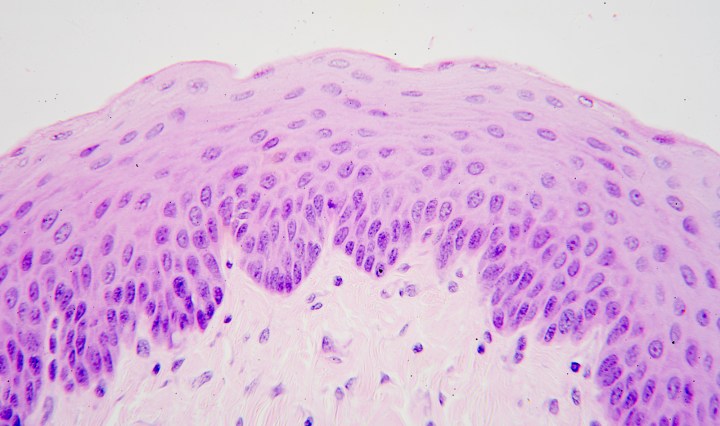
Stratified Squamous Epithelium, non-Keratinized
Stratified epithelium is classified by the cell type on the uppermost layer. Notice that is true for the pictures shown below. They are typically found in locations where constant abrasion is likely, such as mouth, esophagus and vagina. The epithelium … Continue reading Stratified Squamous Epithelium, non-Keratinized

Simple Squamous Epithelium
Simple squamous epithelium is marked by a single layer of flattened cells. The nuclei would likewise be flattened. Because the cell is flattened, its function is for materials to pass through by diffusion or filtration. They can be found around … Continue reading Simple Squamous Epithelium

Simple Cuboidal Epithelium
Simple cuboidal epithelium is marked by a single layer of square like cells. The nuclei can be found in the middle of the cell. This epithelium can be found in the walls of ducts such as the kidney tubules and … Continue reading Simple Cuboidal Epithelium

Motor Endplate
Motor endplate is also known as terminal button. This is the specialized synapse that an alpha-motorneuron makes to all the muscle fibers (i.e. a motorunit) it innervates. Acetylcholine is secreted at the synapse that in turn depolarize the muscle fibers … Continue reading Motor Endplate
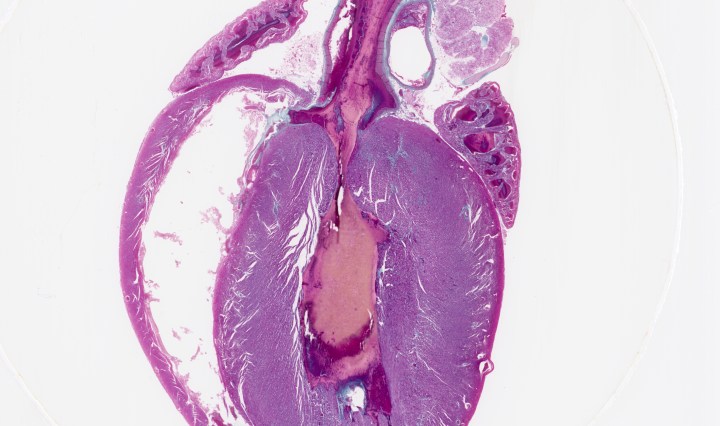
Whole Rat Heart, l.s.
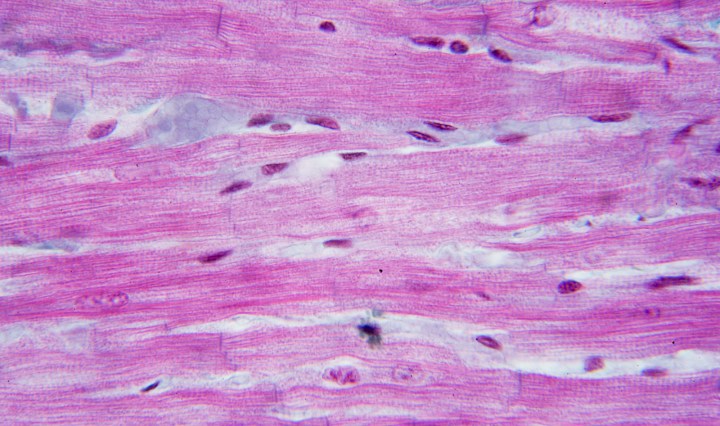
Cardiac Muscle
Cardiac muscle resembles skeletal muscle in the striations and thus also known as striated muscles. However, cardiac muscle is different in that cardiac muscle cells (cardiacmyocytes) do not fuse and thus the resulting fibers are not multinucleated. Each cardiacmyocyte are … Continue reading Cardiac Muscle
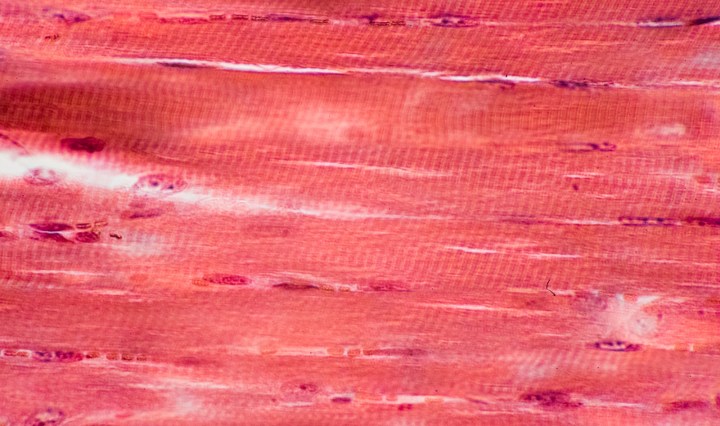
Skeletal Muscle
Skeletal muscle tissue is easily distinguished by the striation (thus also known as striated muscle). They are arranged as long cylinders and since fused from development, contain multiple nuclei within each muscle fiber/cell. Continue reading Skeletal Muscle

Elastic Connective Tissue
This tissue type contains mostly elastic fibers. As a result, it lend the structure it forms recoil after stretching. It can be found in the walls of major arteries such as aorta and of the bronchial tubes. Continue reading Elastic Connective Tissue

Dense Irregular Connective Tissue
Dense irregular CT are collagen fibers arranged irregularly, unlike dense regular CT. The result is a tissue type that can withstand tension (pulling) in many directions. One common location where this can be found is in the dermis of skin. … Continue reading Dense Irregular Connective Tissue
 Kit Ng, Ph.D.