

Skin Layers
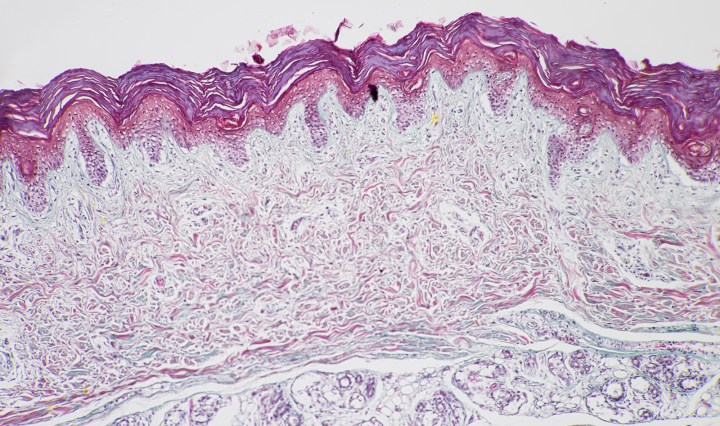
There are four layers of what one consider to be skin, from superficial to deep, they are epidermis, dermis, hypodermis, and deep fascia. Epidermis is formed by stratified squamous epithelial tissue, keratinized type: Dermis has two layers: papillary dermis and reticular … Continue reading Skin Layers

Scalp, horizontal section
Horizontal sectioning of scalp, a thin skin, can be used to demonstrate the cross section of hair. Continue reading Scalp, horizontal section

Nutrient Foramen
Nutrient foramen found in the diaphysis of human femur. Continue reading Nutrient Foramen
Neuron
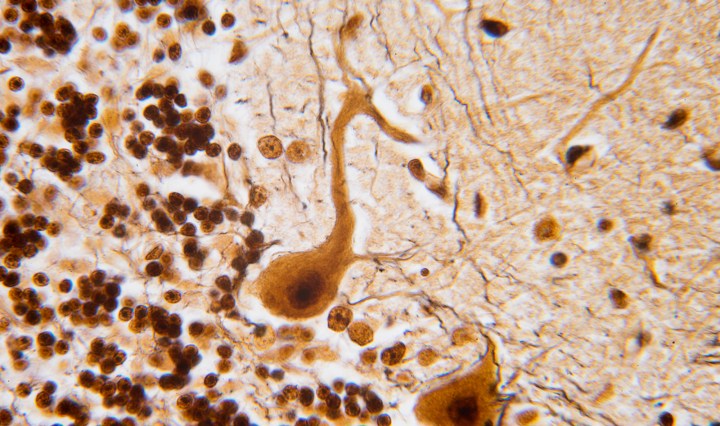
Neurons as a cell type have very diverse structures. They could be classified by their modalities and morphologies. Their functions are to conduct messages to and from the Central Nervous System and Peripheral Nervous System, or within each system.\ Continue reading Neuron

Niemann-Pick Disease, Spleen
Niemann-Pick disease is an autosomal recessive lysosomal storage and lipid storage disorders in which the patient is not able to produce the enzyme Sphingomyelinase. This enzyme is involved in degrading sphingomyelin which is a component of cell membrane. Because of … Continue reading Niemann-Pick Disease, Spleen

E-Chalkboard app: Paper
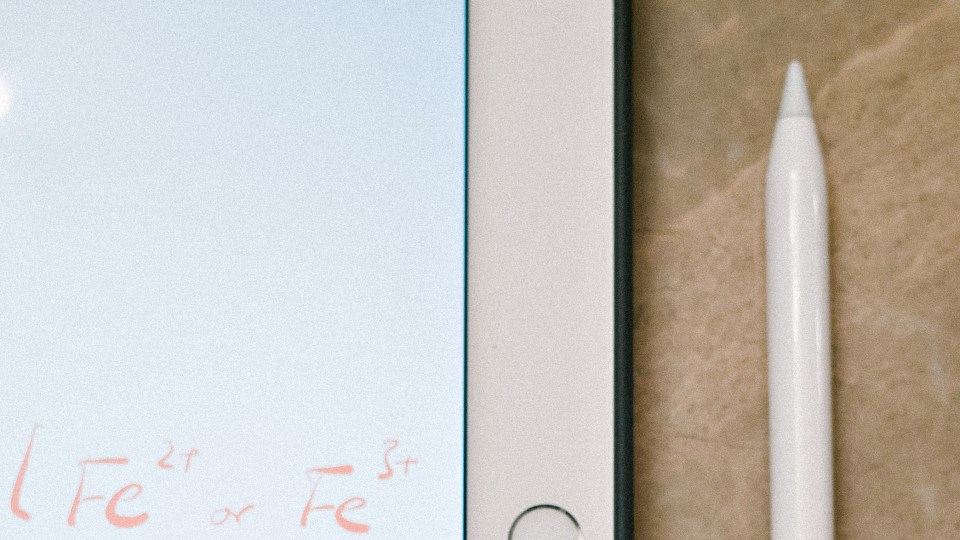
One of the advantage using a tablet to teach is that even when I am just writing and doodling for my students while explaining concepts, I can keep a copy of it and can refer to it in the future. … Continue reading E-Chalkboard app: Paper
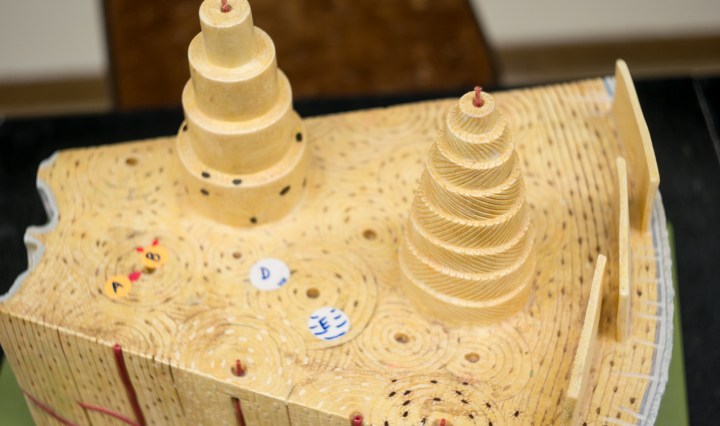
Osteon Model
Models used to demonstrate the osteon/Haversian system in bone tissue. Annotated version here. Continue reading Osteon Model
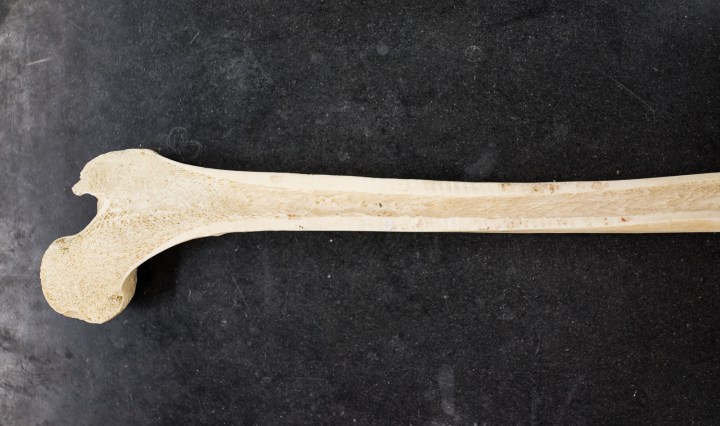
Long bone, l.s.
Longitudinal section of long bone (femur) showing the compact bone and spongy (cancellous) bone. Notice the trabeculae of spongy bone aligning along stress lines. Annotated version here. Another specimen of long bone, l.s. showing the same compact bone and spongy … Continue reading Long bone, l.s.

Bed Desk as Portable Lectern
When I was using mostly my laptop to teach, I didn’t realize this as much. Now that I am using a tablet to teach, I realize that the lectern is often missing from classrooms. I have used everything from a … Continue reading Bed Desk as Portable Lectern

Hyaline Cartilage
Hyaline means “glass-like” or “transparent” because of how it looks under the microscope. It is the most common cartilage and can be found in locations such as trachea, articular surfaces of bones, larynx and nasal septum. Even though it’s called … Continue reading Hyaline Cartilage
 Kit Ng, Ph.D.